
From Aspiration to Opportunity: Why Student Voice Matters
By Chianne Flanagan, BA (Hons) Primary Education
“Supporting young people is not simply about opening the door to higher education. It is about making sure they know the door exists, understand how to reach it and feel confident they belong on the other side.”
As a third-year BA (Hons) Primary Education student at Canterbury Christ Church University, student ambassador and care-experienced student, I have seen first-hand how the right opportunities, information and support can shape a young person’s confidence, aspirations and educational journey. As the first in my family to attend university, I always knew I wanted to work in education, but knowing university was an option was different from believing it was possible for me. Through student outreach, attending KMPF events and student voice initiatives, I have developed a deeper understanding of the important role education professionals play behind the scenes in creating opportunities for students from disadvantaged and vulnerable backgrounds.
KMPF and widening access experience
I did not realise how many opportunities I took part in were made possible through the KMPF partnership until I became involved in its student voice activities. Looking back, I see how these experiences created opportunities and supported progression into higher education.
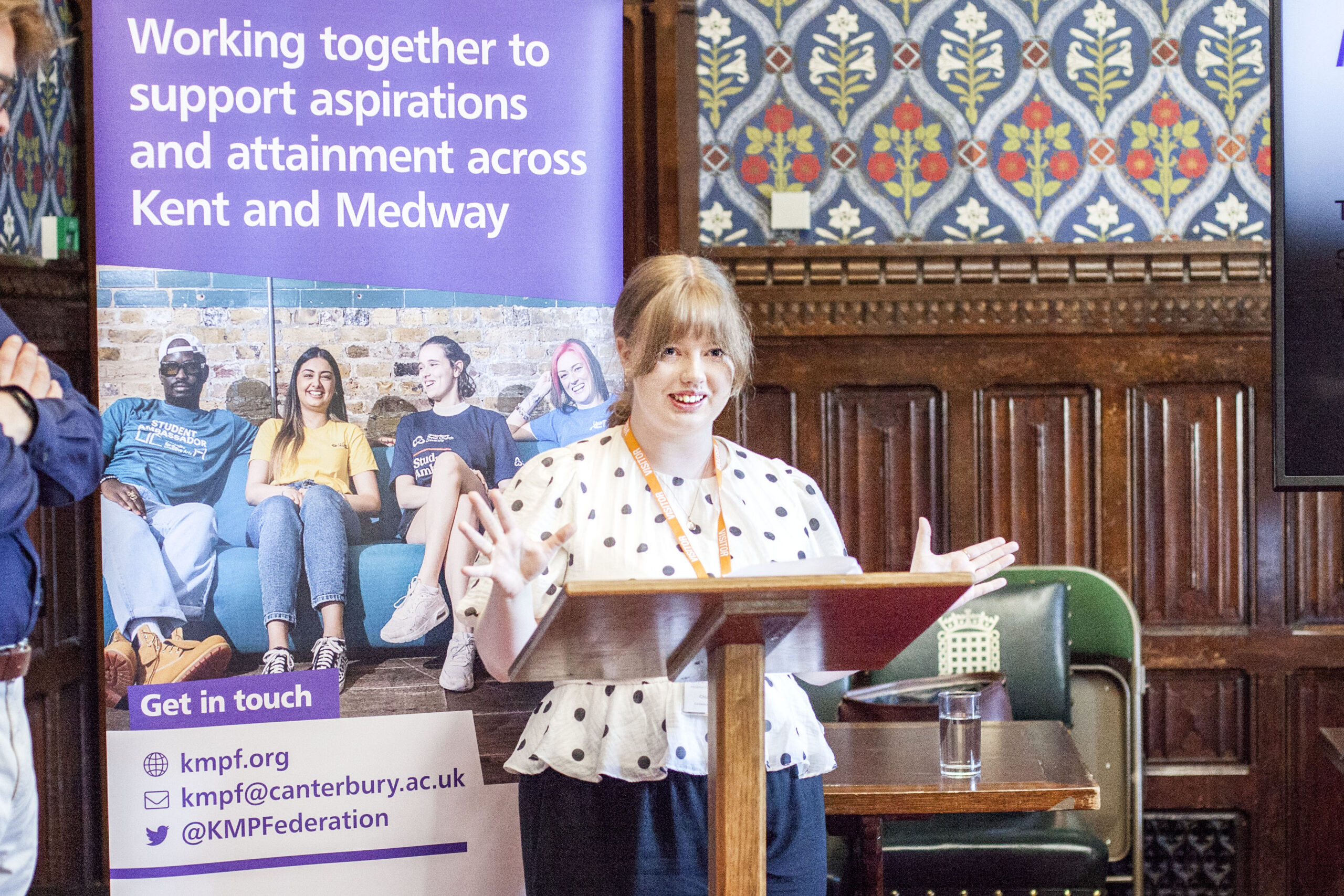
As a student ambassador, I have seen this work from another perspective. At the KMPF FE and HE Leaders Round Table in April, I gave a speech about my educational journey and shared my perspective with senior leaders from colleges and universities. This helped me understand the collaboration behind widening access and the importance of uniting education partners to create clearer pathways. I also attended the Westminster event, which gave me the chance to network with education professionals, share my experiences and discuss the impact widening access has had on my life. Being in such a significant setting and having my student perspective valued was a powerful experience.
I can also see the impact of these opportunities within my own family. My brother attends a KMPF partner school and has taken part in STEM activities and university experiences. Although he is still unsure whether university is right for him, he now sees it as a realistic possibility. For me, this is what widening access should achieve by giving young people the experiences and information to make informed choices about their future.
The importance of student voice
Students’ opinions are an important part of this work. When I was considering university, one of the most helpful things I received was hearing directly from students who had already experienced it. Hearing from people whose backgrounds I could relate to made higher education feel real and achievable. It helped me understand what university was like and gave me the confidence to believe I could belong there. Ultimately, this reassurance helped me choose higher education over a work opportunity.
My experience has shown me how empowering representation can be, but aspiration alone does not remove every barrier. I had a friend who achieved AAB at college and had the ability and ambition to progress to university, but withdrew before starting because financial pressures and barriers related to her disabilities made the transition too difficult. Her experience showed me that academic achievement does not necessarily mean equal access to higher education.
I now have the opportunity to provide some of the reassurance that helped me. I have shared my experiences with learners, supported CPD for other professionals and represented student voice at open days alongside the Vice Chancellor. These opportunities have shown me that student experiences have value and can contribute meaningfully to conversations about education. Students can also help professionals understand what sits behind patterns in data and how support is actually experienced, providing insights that data alone cannot capture. This has shaped the advice I give to professionals supporting young people from disadvantaged or under-represented backgrounds.
What every professional should know
My experiences have made me reflect on what professionals should consider when supporting young people from disadvantaged backgrounds. A student can be ambitious and academically capable while still having limited knowledge of higher education, including applications, finance, accommodation or available support. I would not know what I know now without people taking the time to explain it. Making this information accessible is as important as encouraging students to aspire.
It is important to make different pathways visible. University will not be right for every young person, but students should understand it alongside apprenticeships, employment and work-based higher education so they can make informed choices about their future. Knowing support exists is not always enough. Students may need encouragement to ask for it and confidence they are entitled to use it, particularly when facing financial or other barriers. As support differs between FE and HEI, helping students understand what is available can make transitions more manageable.
Real experiences can make a significant difference. Open days, university visits and outreach activities make higher education feel more tangible, especially when students meet ambassadors whose experiences feel relatable. For me, this helped university feel less intimidating and more achievable. A young person’s postcode, financial position or previous experience should not determine whether they understand what is possible for their future. Professionals have an important role in making opportunities visible and ensuring students are not disadvantaged because they have less access to information, networks or experiences. The opportunities I was given did not determine my future but gave me the confidence, knowledge and experiences to make an informed decision. Supporting young people is not simply about opening the door to higher education. It is about making sure they know the door exists, understand how to reach it and feel confident they belong on the other side.
KMPF works to raise the aspirations and attainment of young people in Kent & Medway. Whether it is a question, a comment, or feedback, we welcome your messages. Get in touch here.